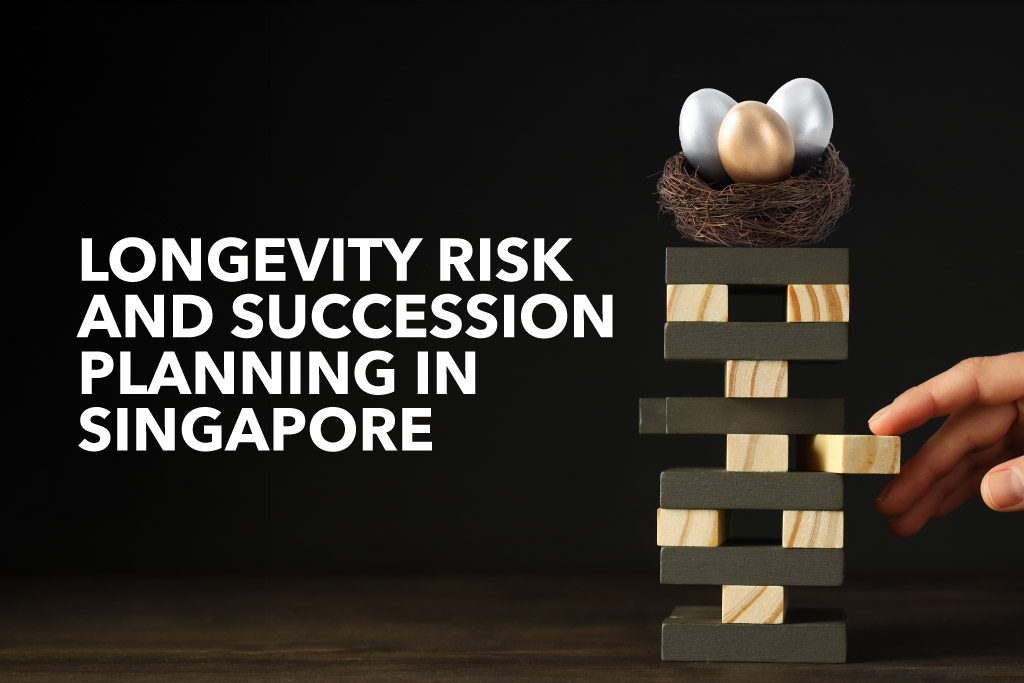
Retirement is often associated with financial security and stability. However, as life expectancy increases in Singapore, individuals face a growing risk of outliving their assets. This longevity risk becomes more complex for business owners, where financial planning must also account for the continuity and eventual transfer of the business.
What Is Longevity Risk?
Longevity risk occurs when individuals live longer than expected, exceeding the assumptions used in financial planning. While longer life is a positive outcome, it introduces the complex challenge of ensuring that savings, pensions, and income streams can sustain a longer retirement horizon.
For individuals, this may mean:
- Gradual depletion of retirement funds
- Increased healthcare and long-term care costs
- Reduced financial independence in later years
The Ageing Population in Singapore
In Singapore, the minimum retirement age is 63. By 2030, around 1 in 4 citizens (23.9%) will be aged 65 and above. To address this, the government introduced the S$3 billion Action Plan for Successful Ageing, launched by the Ministerial Committee on Ageing in 2015.
Even with these framework in place, individuals must take an active role in ensuring their financial resources can support a longer retirement. Traditional retirement strategies may no longer be sufficient, especially when retirement can last 20 to 30 years or more.
The Role of Business Succession Planning
For business owners, longevity risk extends beyond personal finances. A longer lifespan can complicate leadership transitions and impact the long-term continuity of the business. Business succession planning becomes essential in managing both financial longevity and legacy preservation.
Key considerations include:
- Buy-Sell Agreements: These legally binding agreements define how shares are handled in events such as retirement, disability, or death. They provide liquidity to exiting owners (or their families) while ensuring the business remains stable and controlled by the intended parties.
- Revocable Trusts: A revocable trust supports business continuity through its effectiveness during the owner’s lifetime and its ability to enable smooth asset management without court involvement. It also offers flexibility, allowing owners to appoint specific trustees to oversee particular assets, such as the business, so that management is handled by individuals with the appropriate expertise.
Living longer is a testament to progress, but it also demands more thoughtful planning. So plan deliberately and ensure that a longer life remains a secure and fulfilling one!
CONNECT WITH SUMMIT PLANNERS
Partner with Summit Planners for holistic business and estate planning solutions. Contact us at (65) 9669 7574 or visit our website to schedule a consultation.
Sources:
- https://ink.library.smu.edu.sg/lkcsb_research/3201/
- https://www.investopedia.com/terms/l/longevityrisk.asp
- https://www.mom.gov.sg/employment-practices/retirement
- https://www.population.gov.sg/our-population/population-trends/longevity/
- https://www.investopedia.com/terms/b/buy-and-sell-agreement.asp
- https://www.financialplanningassociation.org/learning/publications/journal/AUG24-strategic-role-revocable-trusts-business-succession-OPEN
Disclaimer:
The information provided is for general information only and does not constitute financial advice. While we have taken care to check the source of the information, we cannot guarantee that the information is accurate, complete, or will suit your individual financial needs. You are advised to seek professional assistance.
Share on Facebook Share on LinkedIn Share